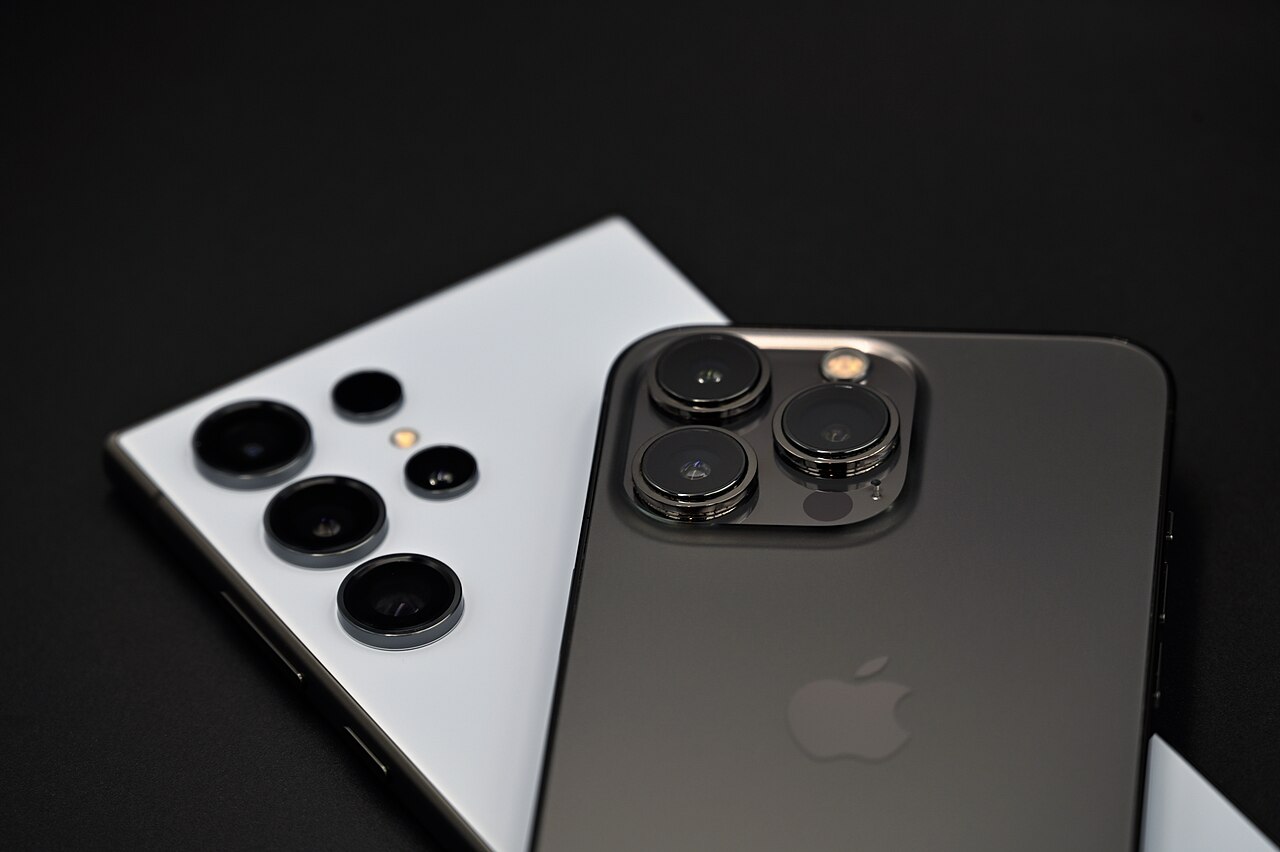
For most of the 2010s, Apple and Samsung competed as hard in court as they did in phone shops. The dispute began on 15 April 2011, when Apple sued Samsung in federal court in California, alleging that its Galaxy phones and Galaxy Tab copied the iPhone and iPad.
Samsung answered within days with suits in South Korea, Japan and Germany, then in the UK, Delaware and at the US International Trade Commission. By late 2011 the two were fighting about 20 cases in ten countries, and by 2012 more than 50 lawsuits worldwide.
The billion-dollar verdict and its unravelling
The headline case went to a jury in the Northern District of California, before Judge Lucy Koh. In August 2012 it awarded Apple $1.049bn over design patents covering features such as rounded corners, the home button and on-screen icons, and utility patents including bounce-back scrolling and tap-to-zoom, and it rejected Samsung’s counterclaims. The award did not survive intact: further proceedings brought the damages down to $290m by November 2013, according to the case record. In May 2015 an appeals court upheld much of the verdict but threw out the trade-dress portion.
A second US trial over newer devices ended in May 2014 with $119.6m for Apple and $158,400 for Samsung. After being struck down and then restored on appeal in 2016, it stood once the Supreme Court declined review in November 2017.
The Supreme Court’s question
Samsung’s main appeal targeted roughly $399m in design-patent damages, calculated on its entire profit from the infringing phones. On 6 December 2016 the Supreme Court ruled 8–0, in an opinion by Justice Sonia Sotomayor, that the relevant “article of manufacture” can be a component, such as a case or screen, rather than the whole product. It left the lower courts to define the test.
At the 2018 retrial Apple asked for $1bn and Samsung argued for $28m. On 24 May 2018 the jury awarded about $539m: $533.3m for three design patents and $5.3m for two utility patents. Samsung sought yet another trial, but on 27 June 2018 the two filed papers dismissing all remaining claims with prejudice, terms undisclosed.
The settlement ended the fight, but the Supreme Court’s component rule outlived it and now governs every design-patent damages claim.
Why it still matters
For company-versus-company fights today, the lessons are practical. Global patent wars are fought on many fronts at once, damages can swing by hundreds of millions of dollars across retrials, and after the 2016 ruling a design patent’s value depends on which part of a product it actually covers.
What to watch
- How courts apply the component test in new design-patent disputes between device makers.
- Whether today’s smartphone rivals settle earlier rather than repeat a seven-year, multi-country fight.