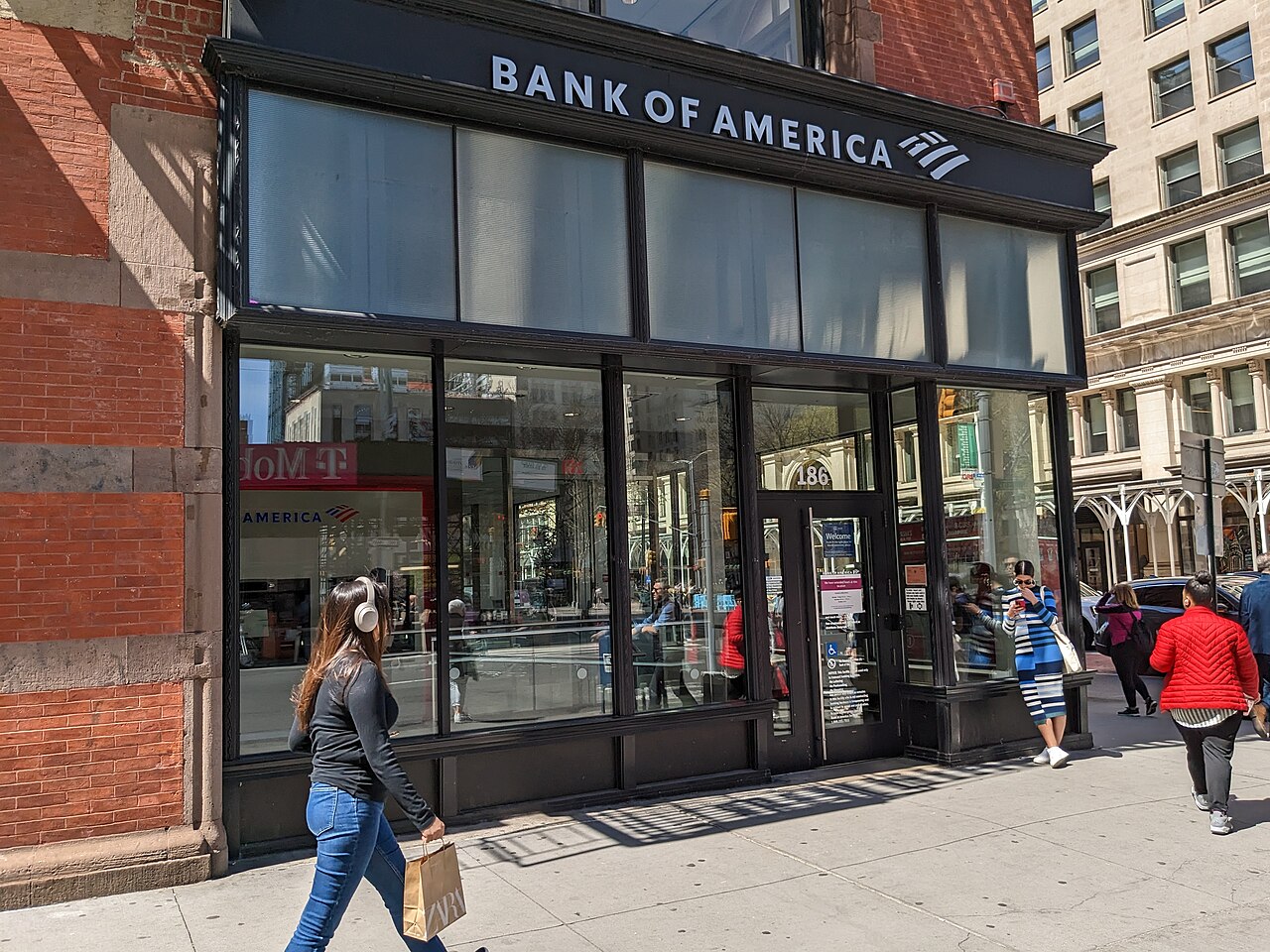
The US Treasury has imposed a $1.2 billion penalty on Bank of America over failures in its anti-money-laundering and sanctions controls, one of the heaviest enforcement actions ever taken against an American lender. The Associated Press, reporting the announcement on 13 October, described it as the third-largest penalty in the department’s history.
The Financial Crimes Enforcement Network (FinCEN) said the bank had not properly mitigated or reported what Treasury calls priority national-security risks, naming Chinese money-laundering networks and illicit finance along the southwest border. According to Treasury, the bank admits that it wilfully violated the Bank Secrecy Act of 1970, the law that obliges banks to help the government detect money laundering.
Of the total, $750 million is payable to the Office of the Comptroller of the Currency, which the AP said is the largest fine that regulator has ever levied.
The sanctions settlement
Alongside the FinCEN case, the bank agreed to pay $11,662,930 to the Office of Foreign Assets Control to resolve 475 apparent violations. OFAC’s notice lists sanctions programmes covering Russia, Belarus, Iran, Burma and Somalia, as well as narcotics and global terrorism.
The conduct OFAC describes is largely operational: processing payments that involved blocked banks, failing to prioritise alerts on customers who exactly matched blocked persons by name and date of birth, slow watchlist updates after new designations, and two business accounts linked to blocked persons that were mishandled through human error. OFAC judged the violations non-egregious but said they were largely not voluntarily self-disclosed.
The penalty is less about a single rogue payment than about screening systems that failed to keep pace with Washington’s expanding sanctions lists.
The bank’s position
Treasury Secretary Scott Bessent said that “even the biggest financial institutions are not above the law,” the AP reported. Bank of America said it had worked with regulators to reach the resolutions, which stem from violations cited in a 2024 OCC consent order and from FinCEN’s investigation.
The case shows how US sanctions policy is enforced through banks’ own compliance systems: every new designation against Russian, Iranian or other targets has to be reflected quickly in screening tools, and lapses can now carry penalties at the billion-dollar scale.
What to watch
- Whether the OCC or FinCEN impose further remediation requirements beyond the 2024 consent order.
- Whether other large US banks face similar reviews of how fast they update sanctions watchlists.
- Any further detail in Treasury’s enforcement release on the periods and transaction values involved.