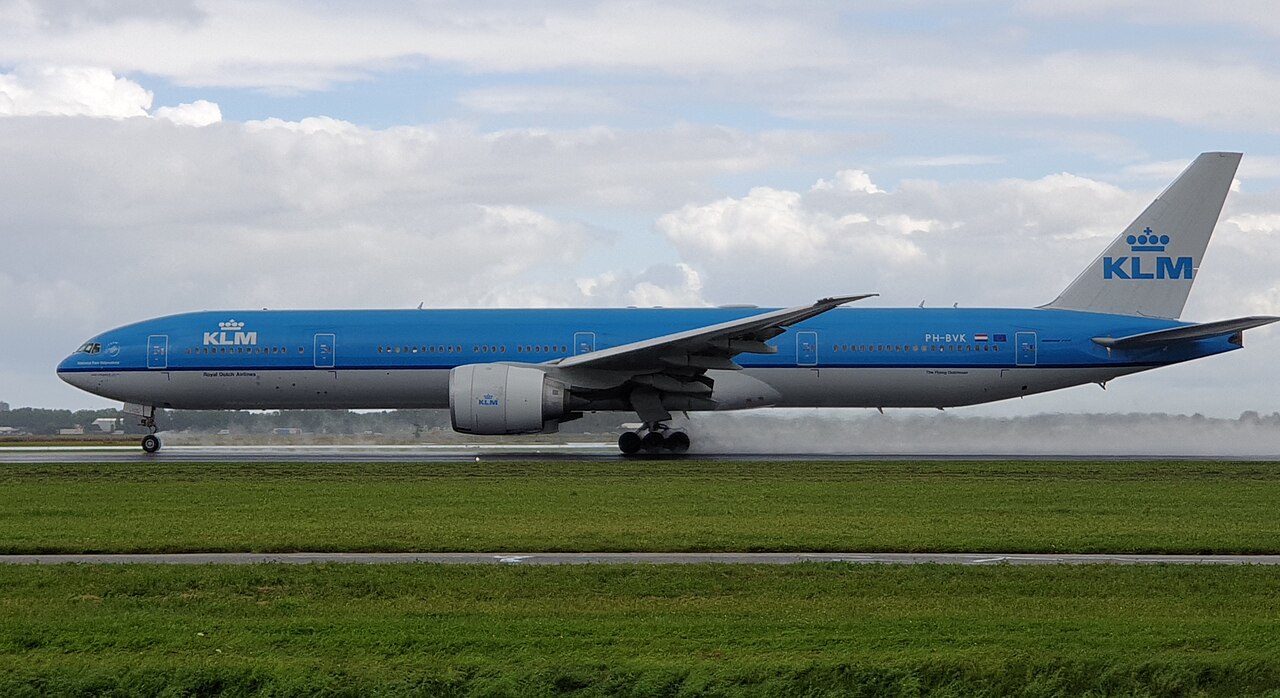
Washington has penalised two European flag carriers for breaking an American airspace ban that only applied to them because of a partner’s flight numbers. The US Department of Transportation fined Air France and KLM a combined $425,000 on 23 October over flights through prohibited airspace above Iraq, FlightGlobal reported.
The flights were codeshares with Delta Air Lines and carried its DL designator. That brought them under Federal Aviation Administration rules that bar US operators from flying below 32,000 feet over Iraq, rules the two airlines would not otherwise have to follow, according to Paddle Your Own Kanoo.
What the regulator found
KLM was fined $320,000 for more than 100 flights between January 2022 and May 2025 that had to fly below the limit because of air traffic control restrictions. Air France was fined $105,000 for 30 flights between April 2022 and November 2025 on which controllers ordered descents below 32,000 feet. Some outlets put the Air France figure at more than 30.
Under the consent orders, the airlines must pay $265,000 between them. The remaining amounts fall due only if either carrier breaks the rules again within a year. The FAA has kept US airlines above 32,000 feet over Iraq since October 2020, after setting a 26,000-foot floor in 2018.
The airlines’ defence
Both carriers argued that the descents were forced on them by controllers and should qualify for the emergency-situation exemption, given the safety risk of refusing an air traffic control instruction. They accepted the consent orders to avoid a court fight rather than conceding the point.
A pattern of codeshare cases
The department has used the same reasoning before. Emirates paid $1.8m in 2024 over Iraqi overflights operated while codesharing with JetBlue, a penalty that also covered flights over Iran. Virgin Atlantic was fined $1.05m for Delta codeshare flights through Iraqi airspace, despite arguing that the UK regulator had lifted its own ban.
For foreign airlines, a US partner’s flight number now brings US airspace rules along with it.
What to watch
- Whether foreign carriers drop US partner codes from routes that cross restricted airspace.
- Further enforcement against other Delta or United partners flying similar routes.