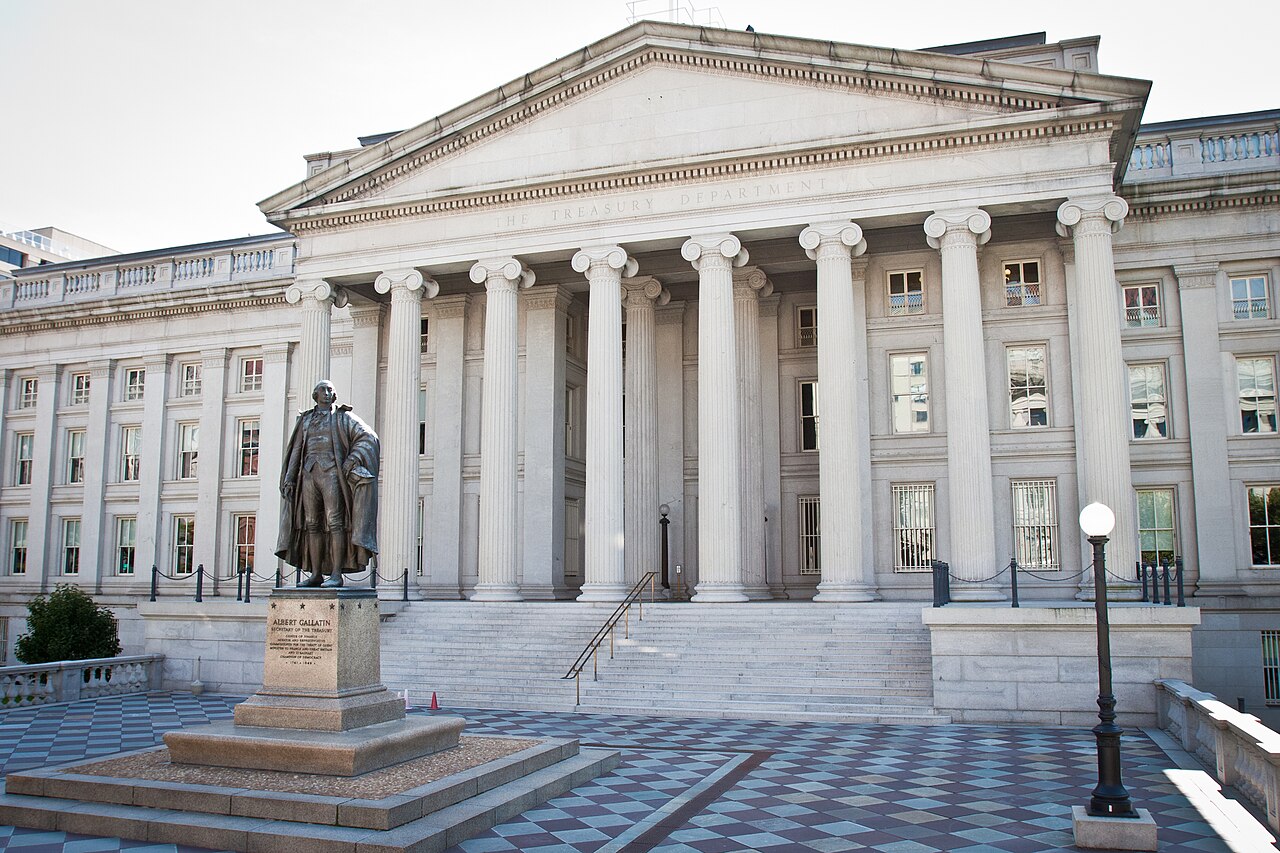
The US Treasury’s Financial Crimes Enforcement Network (FinCEN) on 6 November 2026 named MEXC Global, a cryptocurrency exchange incorporated in the Seychelles, a financial institution of primary money laundering concern in connection with Russian illicit finance. Its order bars US financial institutions from processing funds transfers to or from the exchange.
The order was published in the Federal Register on 10 November and takes effect on 10 December 2026, with no end date. FinCEN acted under section 9714(a) of the Combating Russian Money Laundering Act rather than through a sanctions designation. Branches, subsidiaries and offices of MEXC located in the United States fall outside the order.
The allegations
According to the order, MEXC handled about $16.7bn linked to Russian illicit finance and other illicit activity between May 2021 and May 2026; Decrypt and BleepingComputer, citing Treasury, give the figure as at least $16bn. Around $1.5bn had direct or indirect exposure to Russian sanctions evasion, including $232m in direct transactions with entities sanctioned by the US, EU or UK.
FinCEN says the exchange kept dealing with Garantex, a Russian exchange sanctioned by Treasury in 2022, and its successor Grinex as recently as June 2026. It also cites almost $200m connected to A7A5, a rouble-backed stablecoin, and about $1.87bn in transactions with Iran exposure, more than $1bn of it directly with over 40 Iranian crypto exchangers. FinCEN blames serious weaknesses in MEXC’s anti-money laundering and customer verification controls.
Section 9714 lets Washington sever an offshore exchange from dollar banking with one order, without waiting for a sanctions case.
A large exchange
MEXC was founded in 2018 and traded as MXC until 2021. FinCEN says it operates in more than 170 countries without a virtual asset service provider licence, processes over $1bn a day, holds about $5bn in reserves and had roughly 9% of centralised exchange trading volume in December 2025. Treasury Secretary Scott Bessent said financial institutions “cannot have it both ways”.
MEXC said it was aware of the order, was operating normally and intended to engage constructively with FinCEN, according to BleepingComputer. It added that it had begun an independent review of its anti-money laundering and sanctions controls.
What to watch
- Whether MEXC changes its controls or contests the order before 10 December.
- How banks and payment firms treat MEXC-linked flows before the ban takes effect.
- Further section 9714 orders against crypto platforms tied to Russian finance.