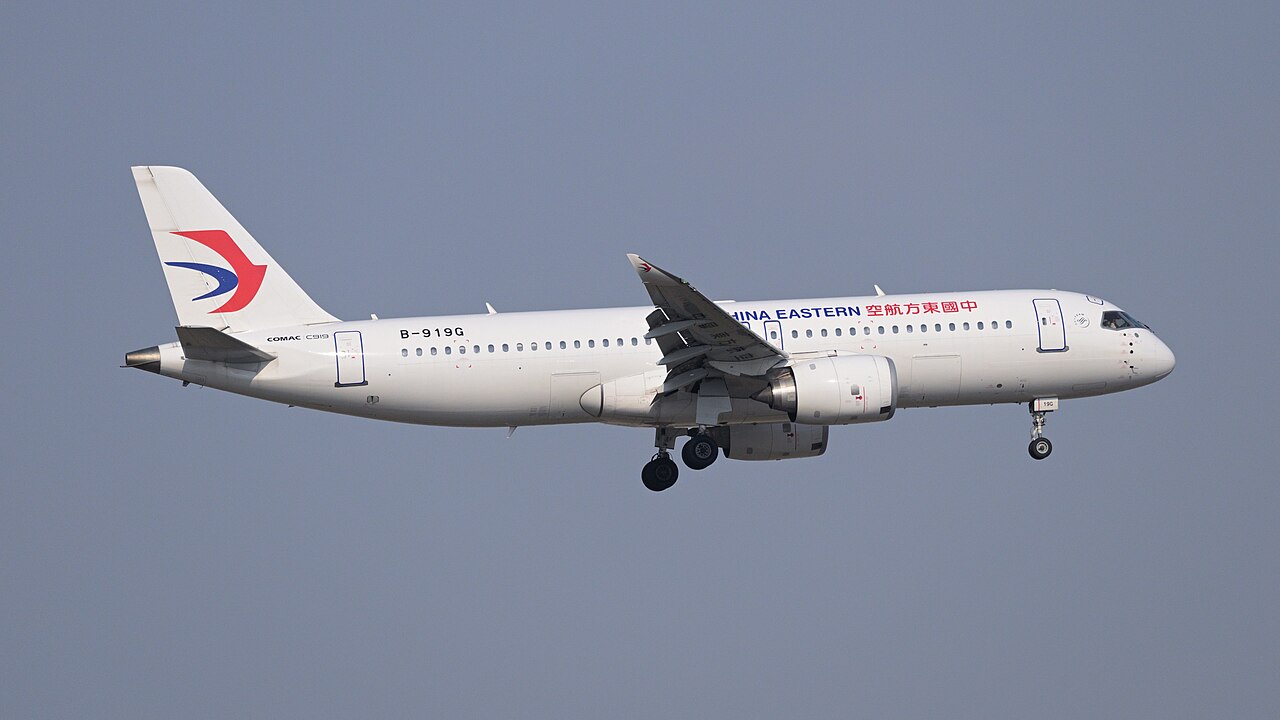
The United States has quietly made it harder for China’s aircraft industry to get American parts. Reuters reported on 1 October that the Commerce Department had slowed export licensing for airplane components bound for China and limited the number of parts cleared for Commercial Aircraft Corporation of China (COMAC), the state-owned maker of the C919, according to people familiar with the matter.
Officials have also weighed a regulation that would make it easier to restrict landing gear and other components, with a draft that includes a licence requirement for aviation hydraulic fluid. One source said the aim was to stop COMAC stockpiling parts. The Commerce Department, the White House and the Chinese embassy did not respond to requests for comment, Hoodline reported.
A familiar lever
The move echoes May 2025, when Washington suspended licences for GE Aerospace engines, Honeywell navigation systems and other COMAC parts after China restricted rare-earth exports. Engine shipments resumed in July 2025. Asia Times ties the latest curb to rare earths again: Chinese customs data showed magnet shipments to the US fell 21% month on month to 512 tonnes in August.
The US–China trade truce, due to end on 10 November, has been extended only to 10 January 2027.
What is at stake for COMAC and Boeing
The C919 depends on the LEAP-1C engine from CFM International, the GE Aerospace and Safran joint venture. COMAC cut its 2025 delivery target from 75 to about 25 and delivered 15. Chinese airlines expect 33 deliveries this year, according to Aviation Week as cited by Hoodline. China’s own CJ-1000A engine is not expected to win production certification before 2027.
The squeeze could rebound on Boeing. China agreed in March to buy 200 Boeing jets, but has asked for years of guaranteed spare parts and maintenance support, and the status of that request is unclear. Airbus holds about 55% of China’s market.
Aircraft parts have become a bargaining chip in a negotiation that is really about rare earths.
What to watch
- Whether the landing-gear and hydraulic-fluid rule is published.
- Any renewed restriction on LEAP-1C engines, which would hit C919 output hardest.
- Progress on China’s 200-jet Boeing order before the truce expires.